
Knowing When to Leave the Stage
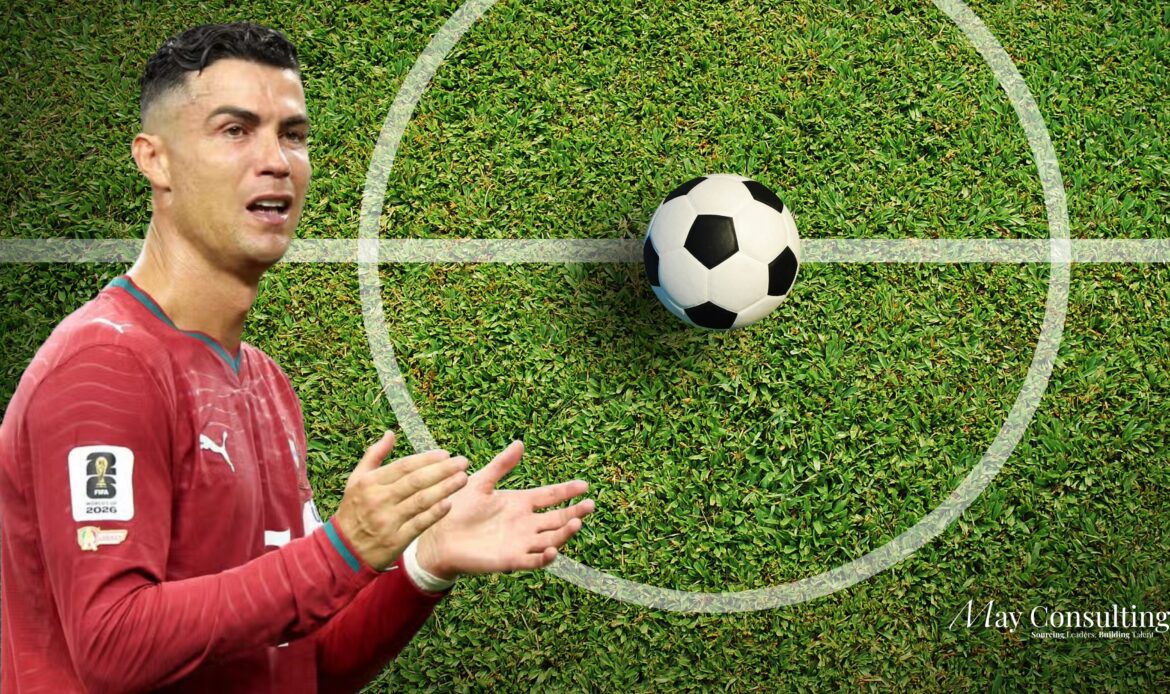
Cristiano Ronaldo has represented Portugal for more than two decades. He has scored more international goals than any other male player in history, captained his country to its first major international trophies and helped transform the expectations surrounding Portuguese football. His place in the history of the game is secure, which makes the events of the past week even more unfortunate. After his disagreement with manager Jorge Jesus and subsequent departure from the Portugal camp, Ronaldo has now issued a lengthy statement explaining his version of events. He says promises were broken and conversations misrepresented, although he also accepts that leaving the camp was wrong and that he deserves to be punished. There may well be legitimate grievances on both sides, but for me the more interesting question has little to do with football. What happens when somebody who has led an organisation for so long becomes so important to it that neither they nor the organisation quite knows how to move on?
The reaction in Portugal has been fascinating because Ronaldo is not simply another footballer there. He is arguably the country’s most famous sporting figure, so criticism of him carries considerably more weight than criticism from the British press. O Jogo’s front page described him as having turned his back on the national team, while A Bola called the circumstances a desperately sad conclusion to more than two decades of extraordinary service. One particularly uncompromising A Bola columnist argued that Ronaldo’s ego had prevented him from recognising the reality of his changing role within the team. That assessment is harsh, and Ronaldo’s supporters understandably point to the enormous contribution he has made, but even the disagreement itself tells us something. Portugal is having a conversation that many businesses eventually must confront: how do you manage somebody whose historic contribution gives them enormous influence when the organisation increasingly needs to evolve beyond them?
When Status Starts to Compete with Leadership
One part of Ronaldo’s statement particularly caught my attention. He published eight points that he says Jesus had agreed to communicate publicly, including an acknowledgement that the manager had made a mistake by asking somebody of Ronaldo’s stature – compared in the document with Pelé and Maradona – to warm up and then not bringing him onto the pitch. Ronaldo says the document was agreed and that Jesus subsequently failed to communicate it as promised. Jesus’s account is different. Before Ronaldo left the camp, the manager was unequivocal about where authority ultimately rested: players may have different status because of their careers, but the rules are the same, and the manager must make decisions according to what is best for the team.
That is where the story becomes interesting from a business perspective. Most of us have encountered founders, chief executives or long-serving senior leaders whose contribution to an organisation is beyond dispute. They built the company, won the customers, recruited the people and took the risks when nobody else would. Their experience deserves respect and their knowledge can be invaluable, but past contribution cannot automatically confer permanent authority. If a business appoints a new Managing Director but the founder continues to approve every meaningful decision, who is actually running the company? If a CEO talks about developing the next generation but continues to dominate every meeting, how are those people supposed to develop? The danger is not necessarily that these individuals are poor leaders. In many cases the problem exists precisely because they were exceptionally successful leaders and have spent decades becoming accustomed to being at the centre of everything.
When Great Leadership Starts to Cast a Shadow
Ronaldo perhaps represents an extreme version of that leadership paradox. The characteristics that made him extraordinary – relentless ambition, astonishing self-belief, competitiveness and an apparent refusal to accept decline – are also characteristics that could make accepting a diminished role extraordinarily difficult. You do not become Cristiano Ronaldo by readily accepting that somebody else should play instead of you. The difficulty is that organisations do not stand still simply because the person who once led them brilliantly would prefer things to remain as they were.
This is where leaders can unintentionally begin to create unhealthy cultures. If one person’s status becomes so significant that everybody else must operate around them, talented people can stop taking responsibility. Successors never really succeed because the previous leader remains in the room, either literally or metaphorically. Football itself provides one of the best examples. When Bill Shankly retired from Liverpool in 1974, he continued to visit the club’s Melwood training ground. Such was his personality and standing with the players that his presence inevitably made life more difficult for his successor, Bob Paisley, and Shankly was eventually discouraged from attending. It may have seemed harsh, particularly given everything Shankly had done for Liverpool, but Paisley needed the space and authority to lead the club in his own way. What followed was arguably the most successful period in Liverpool’s history, with Paisley winning six league titles and three European Cups in nine seasons. The lesson wasn’t that Shankly had suddenly become a problem; it was that even the greatest leaders can cast a very long shadow. People can learn that challenging the established figure carries more risk than agreeing with them, and an organisation that believes it is protecting experience may be suppressing new ideas and new leadership. That doesn’t necessarily make the senior figure toxic, and I would be reluctant to use that description casually about Ronaldo. But a culture can become unhealthy without anybody deliberately setting out to create one.
There is also an uncomfortable question here for business owners. We spend years saying that we want to recruit people who are better than us, develop future leaders and build businesses that aren’t dependent upon one individual. But how comfortable are we when it starts to happen? It is easy to advocate succession when succession remains theoretical. It becomes rather more difficult when somebody else starts making decisions differently, building their own relationships and receiving the recognition that previously came to us. Perhaps one of the final stages of leadership maturity is understanding that becoming less important to the organisation isn’t evidence of failure; it may be evidence that you have succeeded.
Two Legends, Two Very Different Exits
The timing of all this could hardly have been more striking because, while Portugal has been debating Ronaldo’s future, Lionel Messi has just brought his own international career to an end. More than 85,000 people were inside the Monumental in Buenos Aires for his final appearance for Argentina. It was an emotional celebration of a 21-year international career, and Messi leaves having won the World Cup and two Copa América titles after a relationship with his national team that, interestingly, wasn’t always straightforward. For years he was criticised in Argentina for supposedly failing to reproduce his Barcelona form or even for not caring enough about the national team. His eventual farewell therefore represented not simply the retirement of a great footballer, but the conclusion of a relationship that had gone through criticism, failure, redemption and ultimately extraordinary success.
What interested me most, however, wasn’t the size of the crowd or the trophies. It was Messi’s explanation for leaving. He said he had given everything he had to the national team and recognised that there were excellent young players coming through who deserved their opportunity. He would now become another supporter, encouraging them from outside the team. There is something remarkably powerful in that. Leadership eventually requires us to accept that the next generation needs space, and sometimes the greatest contribution we can make is to stop occupying it.
That doesn’t make Ronaldo’s extraordinary contribution to Portugal any less significant, nor does it mean we know everything that happened behind closed doors during the past week. His version of events deserves to be heard, just as Jorge Jesus’s does. But the contrast between two of the greatest players ever to play the game is difficult to ignore. One leaves international football surrounded by teammates and supporters, publicly acknowledging that younger players deserve their opportunity. The other finds himself in a very public dispute over his role, his status and how he should be treated by the person now responsible for managing the team.
There is a lesson in there for anyone who has led a business, built an organisation or occupied a senior position for a long time. Leadership isn’t simply about knowing how to take control. At some point it also becomes about knowing when to surrender some of it. The strongest legacy may not be an organisation that continues to depend upon you, but one that can succeed long after you have stepped aside.
As for the argument football supporters have been having for the best part of twenty years about Ronaldo and Messi, I’ve always had my own view on that one. Messi was better on the pitch. Judging by the way the two men are approaching the end of their international careers, he might just be better at leaving it as well.